Memory Scheduling
Not all memories are equally urgent. Awareness handles memory writes and updates intelligently — so your AI agent isn't bottlenecked by storage, and your context window isn't cluttered with low-value noise.
The Core Idea
When you're in the middle of a conversation with your AI agent, you don't want it pausing to run heavy knowledge extraction. And when a project has accumulated years of memory, you don't want every recall query to return thousands of loosely relevant results.
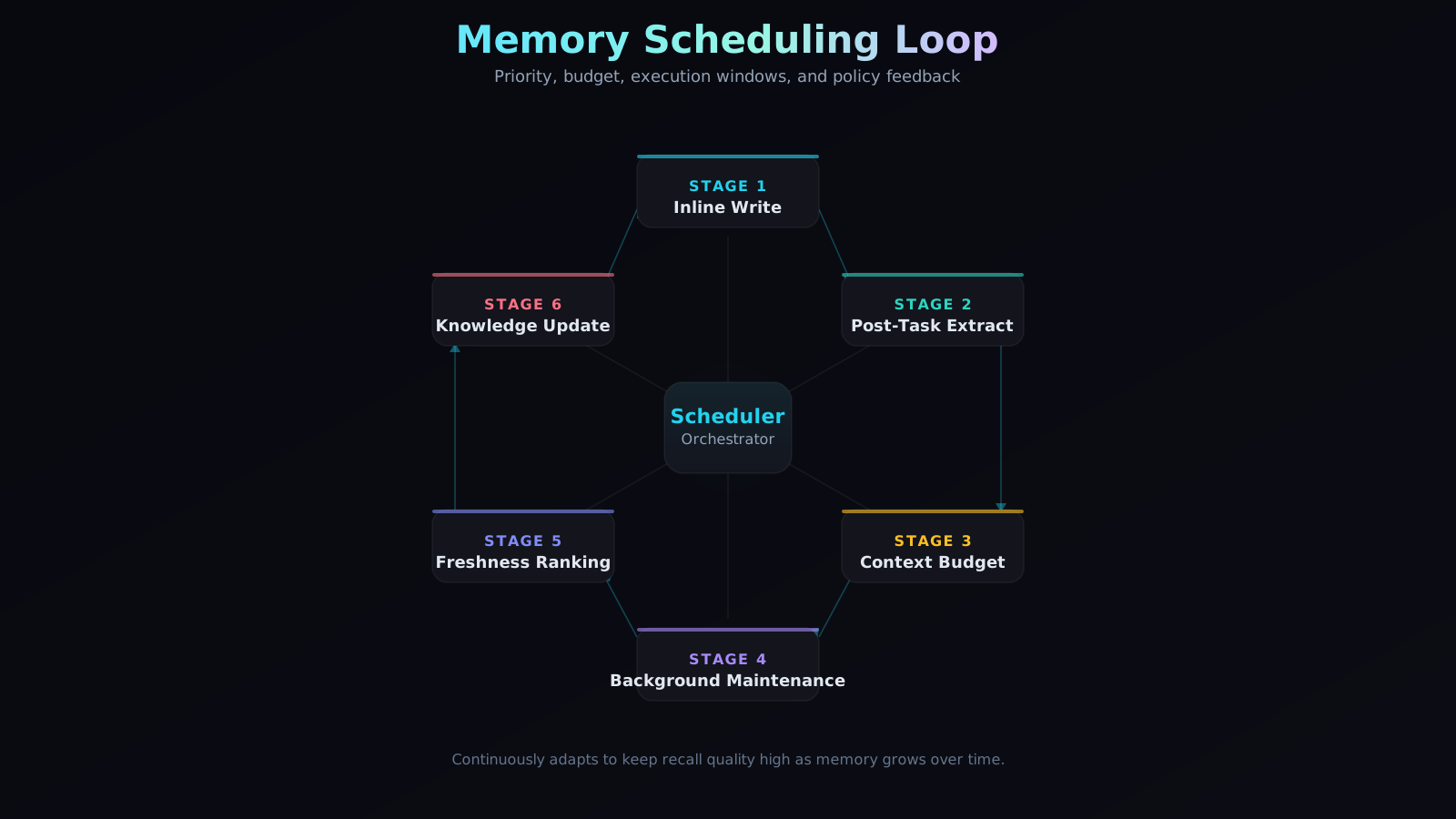
Memory scheduling is how Awareness answers the question: when should each piece of memory be written, updated, or surfaced?
Write Timing
Not all memory writes happen at the same time:
-
Inline writes — Critical decisions and pitfalls are saved immediately during the interaction, so nothing important is lost even if a session ends abruptly.
-
Post-task writes — After a task or session completes, Awareness processes the full context to extract structured knowledge. This is when most knowledge cards are created.
-
Background maintenance — Periodically, Awareness runs housekeeping tasks: merging near-duplicates, flagging stale records, refreshing clustering indexes.
Context Budget: Only What Fits
When an AI agent asks Awareness for context, the response is automatically sized to fit. Awareness uses a token budget during context assembly — returning the most relevant knowledge first, then progressively adding detail only if there's room.
This means:
- Your AI agent's context window isn't wasted on redundant background
- Longer sessions stay fast
- Recall quality stays high as memory grows
Practical Patterns
Prioritize critical information: If an agent makes an important architectural decision or hits a critical bug, record it immediately. Don't wait for the end-of-session sweep.
Batch low-signal events: Routine log lines and minor exchanges don't need immediate extraction. Let them queue for batch processing.
Prefer updates over rewrites: When a fact changes (e.g., a dependency version is updated), Awareness increments the existing card rather than creating a duplicate. This keeps memory growth manageable.
Why It Matters
- Less noise in context — Only the most relevant knowledge reaches your AI agent in each session
- Better multi-agent consistency — Shared memory stays coherent even when multiple agents write simultaneously
- Controlled growth — Long-running projects don't accumulate unbounded storage