Memory Production
How does Awareness turn a conversation into something useful you can retrieve later?
The Problem It Solves
Most AI systems either discard conversation history or dump everything into undifferentiated text storage. When you ask "what did we decide about auth last week?", you get either nothing — or a wall of raw text to wade through.
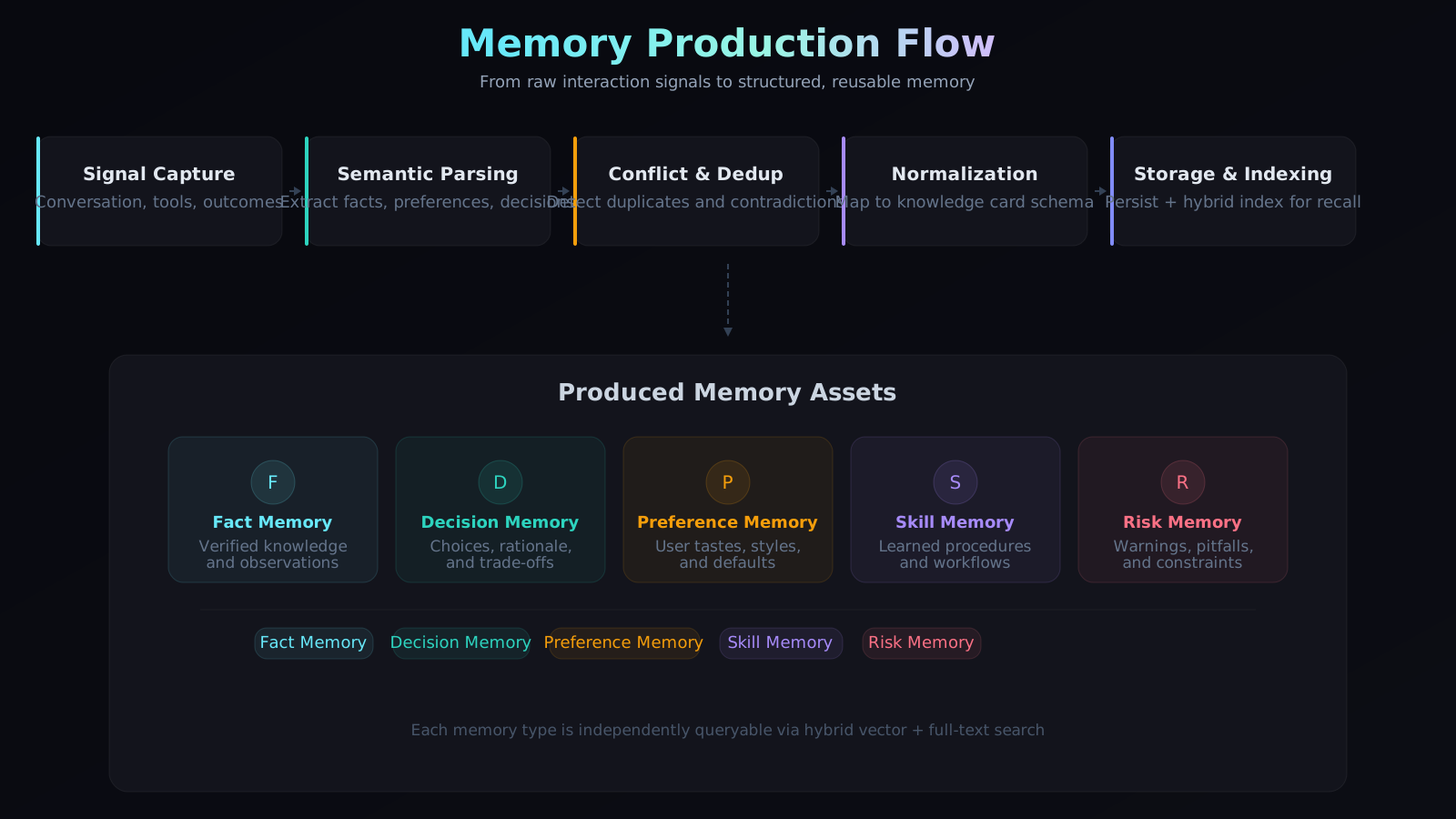
Memory production is the process that converts raw interactions into structured, searchable, reusable knowledge. It's the difference between a file cabinet full of loose papers and a well-organized knowledge base.
How It Works
Step 1: Capture
When something happens — a conversation turn, a tool result, a code review — Awareness captures it as an event. You don't need to organize it. Just record what happened.
Step 2: Extract
Awareness analyzes the event and identifies what kind of knowledge it contains:
- Is this a decision that should be preserved? ("We chose Postgres over MySQL.")
- Is this a pitfall others should know about? ("Redis cache eviction caused silent failures.")
- Is this a skill someone could reuse? ("Database migration steps: backup → migrate → verify")
- Is this a preference? ("Team always uses snake_case for DB column names.")
If a clear category is identified, a knowledge card is created.
Step 3: Check for Duplicates and Conflicts
Before saving, Awareness checks:
- Is this already known? Near-duplicates are skipped or merged.
- Does this contradict something? If a new card conflicts with an existing one, the conflict is flagged and the outdated card is marked as superseded. A warning can surface to the AI agent.
Step 4: Save and Index
The knowledge card is saved in a structured format and indexed for fast retrieval. The same knowledge can be found via:
- Natural language questions ("What did we decide about caching?")
- Keyword search ("Redis cache")
- Related card traversal (cards linked to similar topics)
What Gets Produced
After production, your memory contains:
| Memory Type | What it holds |
|---|---|
| Facts | Stable truths about the project ("Backend uses FastAPI") |
| Decisions | Architecture choices with their rationale |
| Skills | Step-by-step procedures you can replay |
| Pitfalls | Warnings, known traps, and constraints |
| Preferences | How you and your team like to work |
Why This Matters for AI Agents
Without memory production, an AI agent has no usable history. With it:
- The agent knows your project without being re-briefed
- It warns before repeating a known mistake
- It reuses your step-by-step workflows without asking again
- It understands why things are the way they are, not just what they are