Awareness: The Memory & Growth System for AI Agents
Positioning: Cloud Memory Infrastructure for Multi-Agent Systems Core Value: Not just making AI remember — giving AI "experience", "cognitive habits", and the ability to grow.
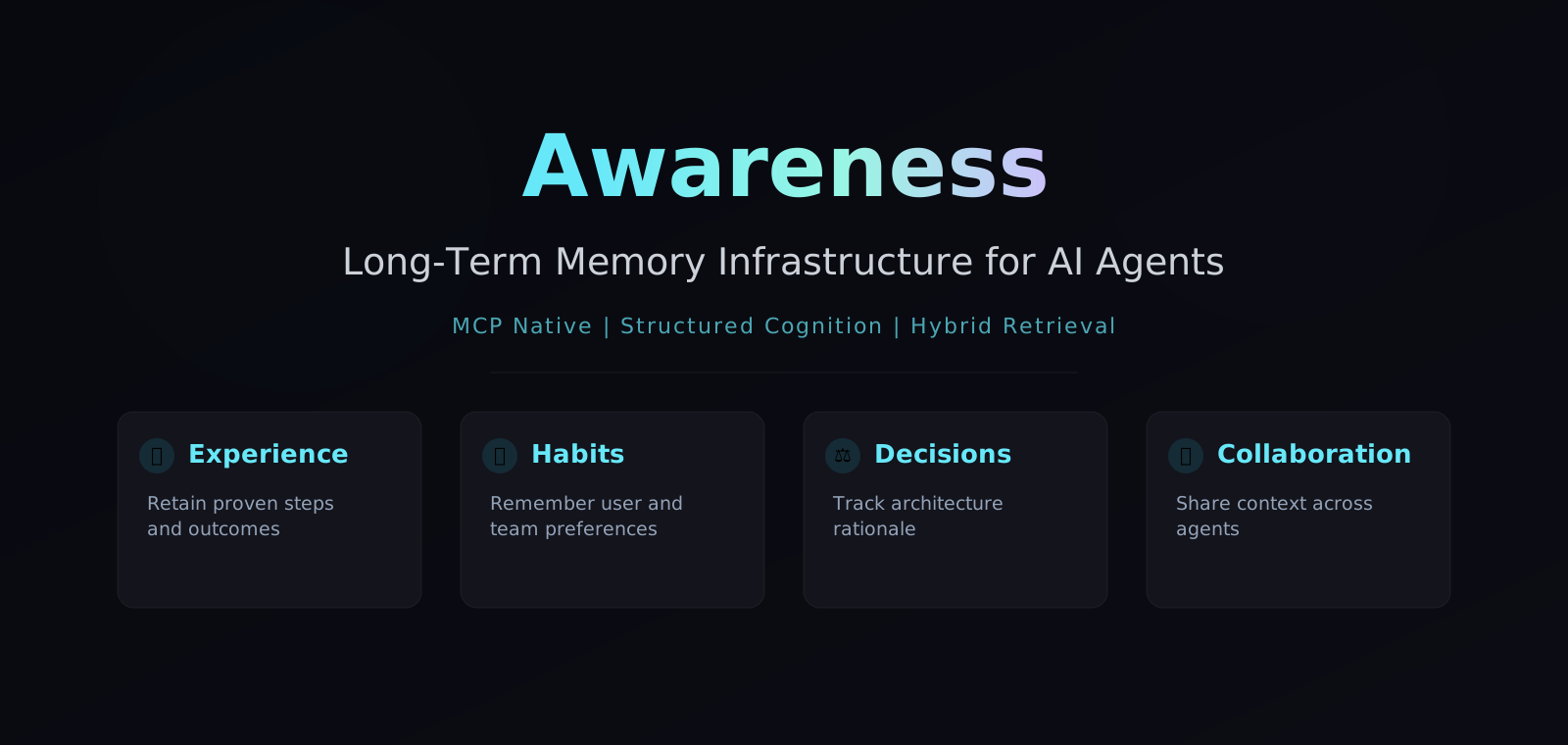
What is Awareness?
Every time your AI agent starts a new session, it forgets everything. You re-explain the same project context, re-teach the same coding preferences, watch it repeat the same mistakes.
Awareness solves this. It is a cloud memory infrastructure that gives AI agents persistent experience — not just raw text storage, but structured knowledge that grows smarter with every interaction.
Think of it as the difference between an employee who reads every note from scratch vs. one who has truly internalized years of team experience. Awareness turns your AI agent into the latter.
Why Awareness Is Different
Most memory solutions store text and retrieve it. Awareness does something fundamentally different: it understands what happened and stores it as structured knowledge — decisions, skills, pitfalls, preferences — the kinds of things that actually help an agent act better next time.
From Conversations to Decision Assets
When your AI agent completes a task, Awareness automatically distills the session into reusable knowledge cards:
- Decisions — "We chose Postgres over MongoDB because of join complexity"
- Pitfalls — "Do not run
db pushin production — it drops columns" - Skills — "Deployment: pull → build → nginx reload"
- Preferences — "Always use snake_case variable naming"
Next time any agent — or team member — faces the same question, the answer is already there.
Experience Accumulates Across Agents
In a multi-agent system, Agent A's hard-won lessons don't disappear when Agent B takes over. Awareness routes memory across agents via the MCP protocol, so:
- Agent A researches and abandons a bad approach → Agent B automatically sees the warning
- A code reviewer agent has full context on why a design decision was made
- New team members inherit the entire project knowledge history on day one
No More Repeating Yourself
Awareness remembers your workflow preferences, team conventions, and project context across all sessions and IDEs. Switch from Cursor to VS Code — your AI agent still knows how you work.
Six Core Values
1. Conversations Become Assets
Each discussion or task session is automatically distilled into retrievable decision cards and experience chains. Nothing is lost. No more re-explaining context.
2. Skills and Preferences That Stick
Awareness records not just what was done, but how — reasoning steps, solution approaches, conflict resolutions, team preferences. Reuse complete workflows, not just fragments.
3. Step-by-Step Execution Cards
Cards carry full execution guides: steps, prompts, prerequisites, and risk markers. They serve as executable instructions, not just notes.
4. Conflict Detection & Self-Healing
Awareness automatically detects when new knowledge contradicts existing records. Outdated or conflicting cards are flagged, keeping your knowledge base accurate over time.
5. Architecture Traceability
Every decision is recorded with its rationale. When someone asks "why was this designed this way?", the answer is in the knowledge graph — not just the code.
6. Experience as a Tradeable Asset
The Memory Market lets you install high-quality Skill packs and decision templates built by experts — directly usable in your projects.
Real-World Scenarios
Vibe Coding: When Your Agent Forgets Everything
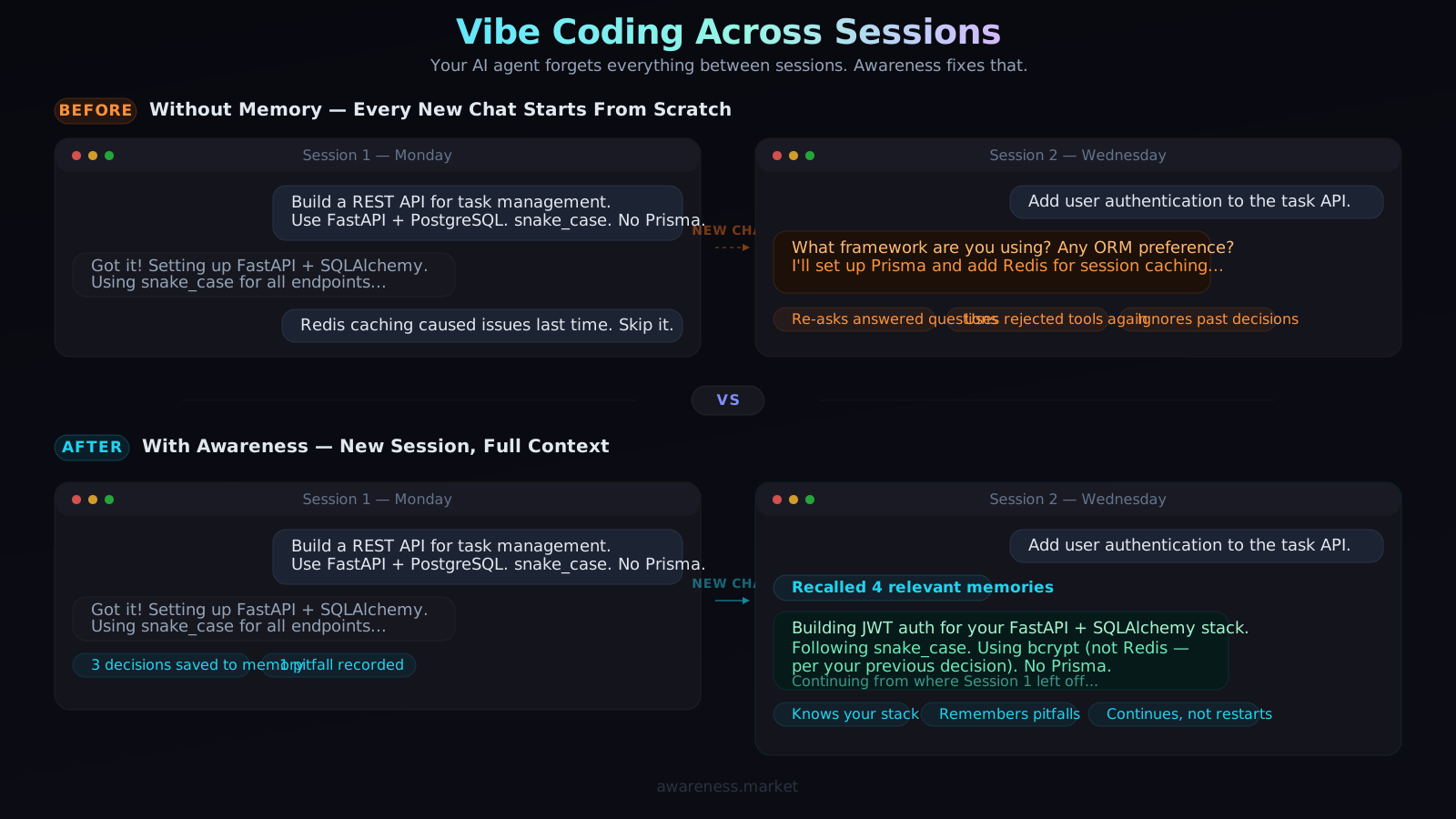
The biggest pain in vibe coding isn't writing code — it's re-explaining context every session. You tell your agent to use FastAPI with snake_case. Next session, it asks "What framework are you using?" You warn it not to use Redis caching. Next session, it adds Redis caching.
With Awareness, every decision, preference, and pitfall is automatically saved and recalled. New session ≠ new context. Your agent picks up exactly where you left off.
Team: Preventing Repeated Mistakes
Agent A investigates a library and abandons it after finding a critical bug. Three weeks later, Agent B tries to add the same library. Awareness surfaces the conflict — "Architecture Decision Conflict Detected" — and shows Agent B the original research conclusions before any code is written.
Solo Developer: AI That Knows You
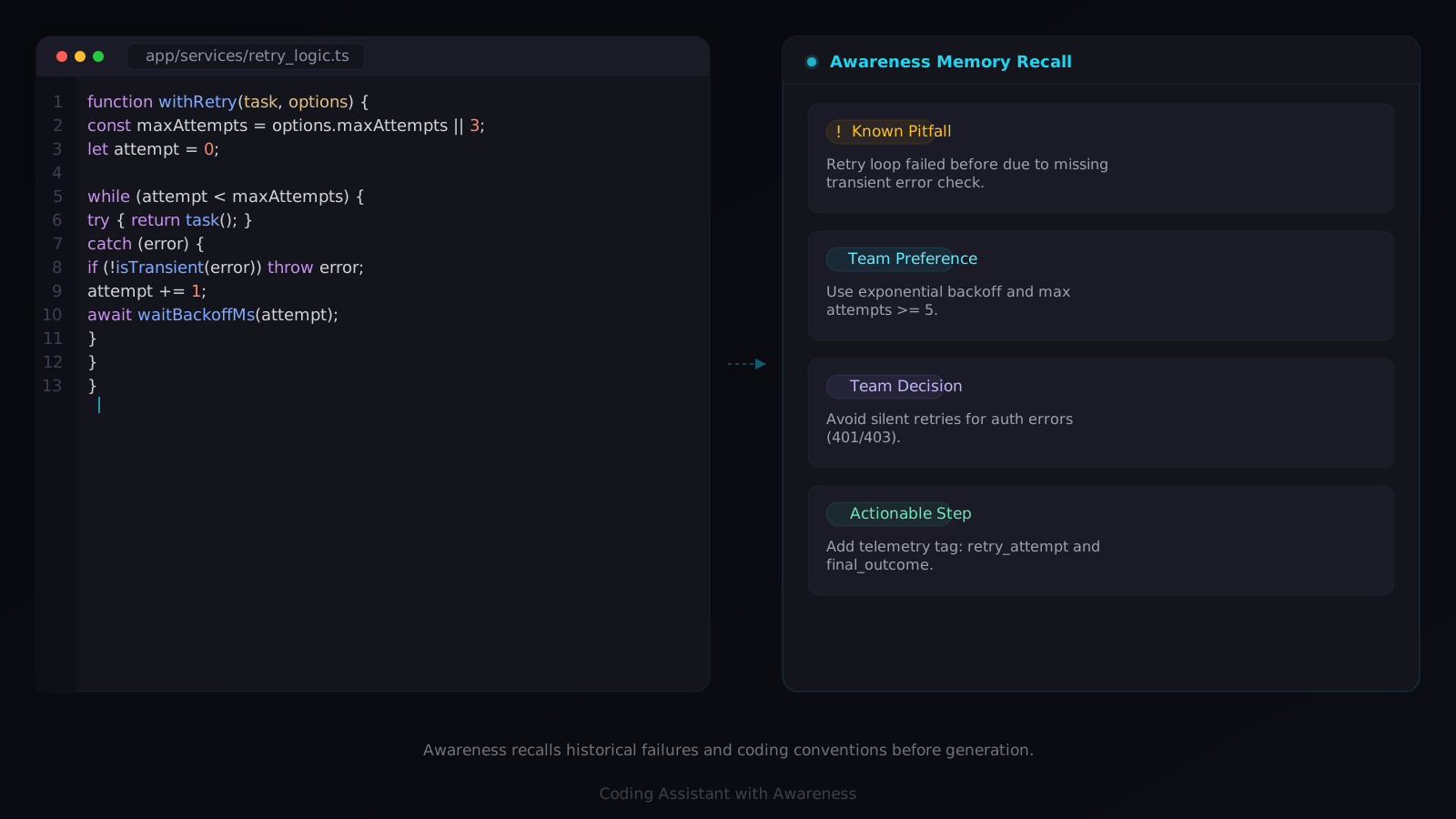
Your AI coding assistant remembers:
- Your preferred coding style and naming conventions
- The libraries you use and their specific versions
- How you handled that database migration issue last month
No re-training. No re-explaining. It just knows.
New Team Member Onboarding
A new engineer (human or AI agent) joins the project. Instead of reading weeks of Slack history, they query Awareness:
- "Why was the auth system redesigned in November?"
- "What deployment steps does this project use?"
- "What are the known pitfalls in the payment module?"
All answers are ready, traced to their original context.
Not Just Conclusions — The Thinking Behind Them
Most knowledge systems capture what was decided. Awareness captures why.
When your AI agent researches three options and picks the second one, it doesn't just record the choice — it records the reasoning chain: what it considered, what it ruled out, and why. Months later, when someone asks "why didn't we use option A?", the answer is there — not buried in a Slack thread or lost in a closed browser tab.
This is the difference between a system that remembers facts and one that remembers how decisions were made.
When Things Change: Full Version History
Projects evolve. Decisions get revisited. What was right in January might be wrong in October.
Awareness keeps the full version history of every knowledge card. If you adopted Framework X in March, moved away from it in June after performance issues, and considered coming back in September — all three states exist, dated and traceable.
When an agent asks "what do we think about Framework X?", it gets the current verdict and the context of how you got there. No lost history. No mystery reversals.
Three-Layer Architecture
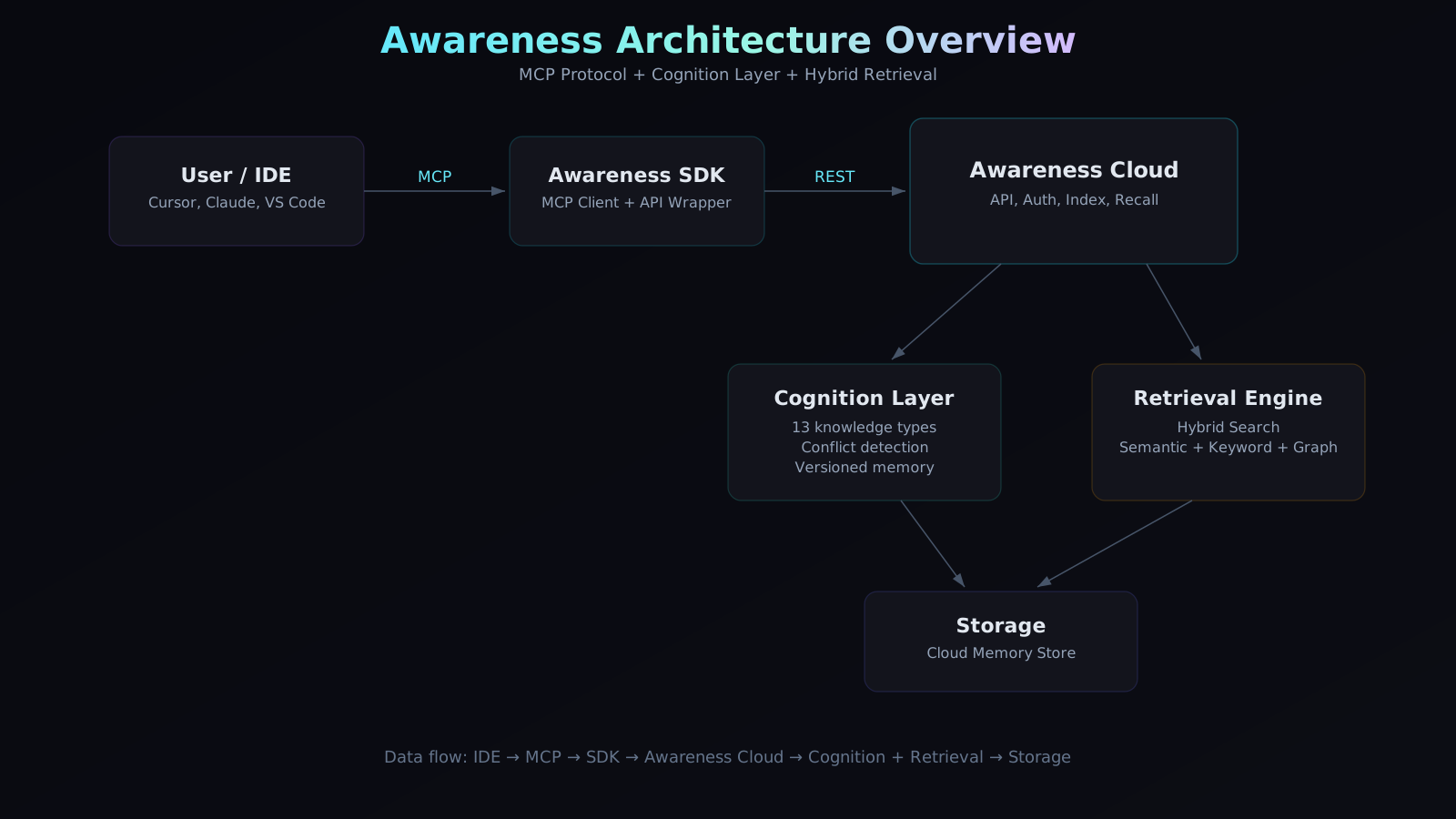
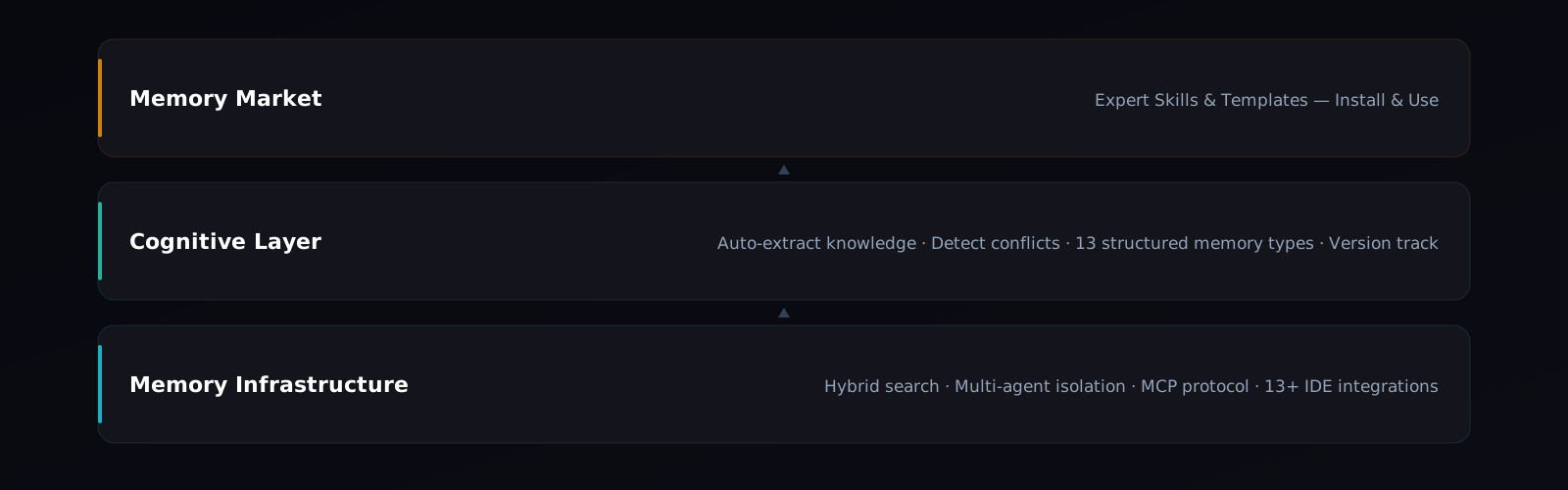
Awareness is organized into three layers, each with a distinct role:
-
Memory Infrastructure — The foundation. Stores and retrieves memory using hybrid search (semantic + keyword + knowledge graph). Connects to 13+ IDEs and supports multi-agent environments via the MCP standard protocol.
-
Cognitive Layer — The differentiator. Automatically extracts 13 types of structured knowledge from your sessions. Detects conflicts between old and new information. Manages memory versions over time. Uses progressive disclosure to deliver only what's relevant — saving context tokens significantly.
-
Memory Market — The ecosystem. High-quality Skill packs and templates created by experts, installable and immediately usable. Forms a growing library of reusable AI experience.
🚀 Next Steps
- Quick Start — Get running in 5 minutes
- Core Concepts — Understand memory, knowledge cards, and recall
- SDK Usage Guide — Python / TypeScript SDK reference