Algorithm Overview
A plain-language explanation of how Awareness works under the hood — what it does with your memories, and why it finds the right thing when you ask.
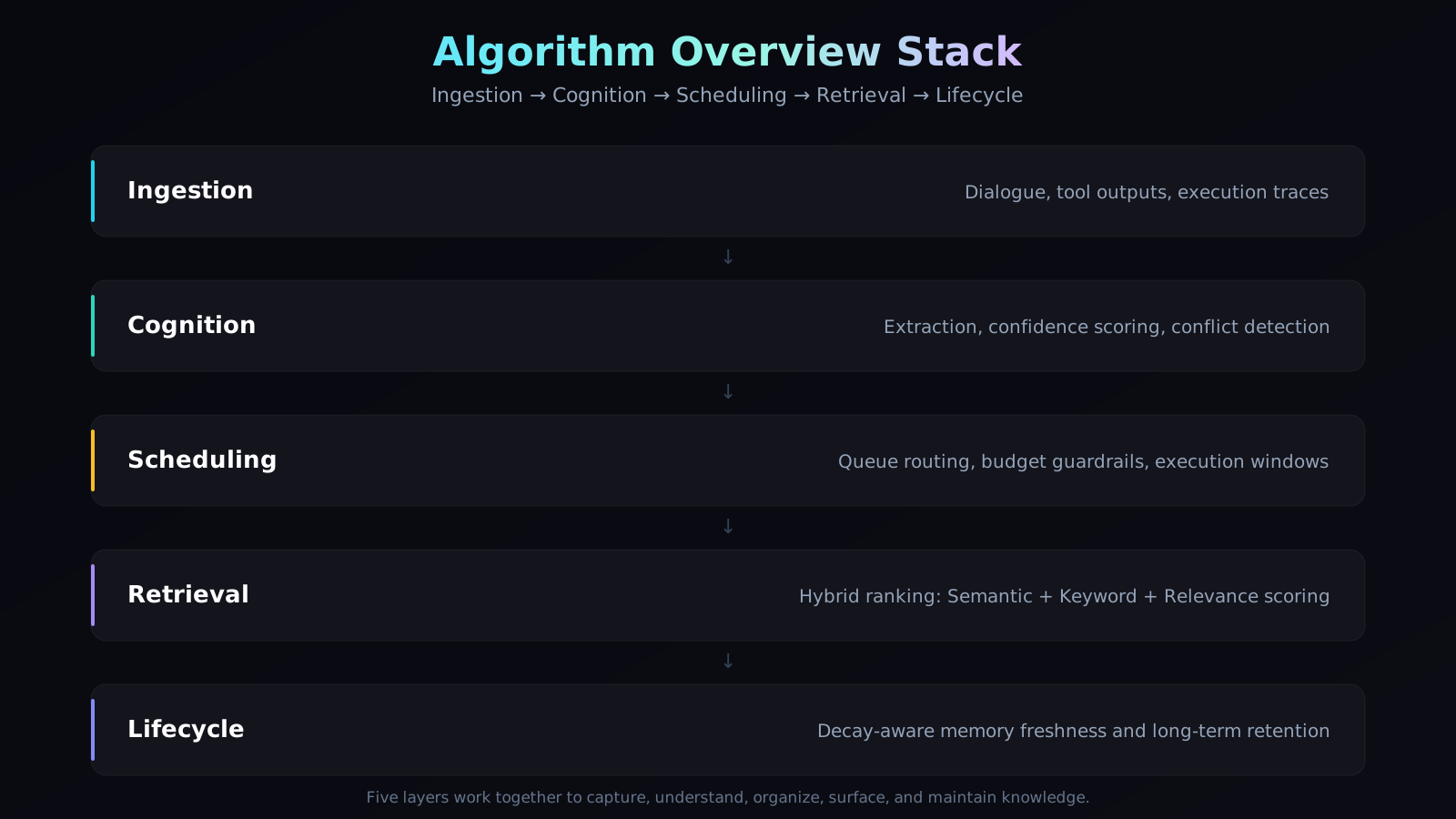
The Five Layers
Awareness processes memory in five stages, from raw input to useful output:
1. Capture
Conversations, tool results, and task outputs arrive as events. Think of this as the "inbox" — everything that might be worth knowing comes in here first.
2. Understand
This is where Awareness reads each event and decides what kind of knowledge it contains. Is this a decision? A pitfall? A skill? A preference? The system classifies it, extracts a structured summary, and assigns a confidence score. Low-confidence extractions are held back.
3. Resolve
Before saving, Awareness checks against everything already stored:
- Is this a duplicate? → Merge or skip.
- Does this update something older? → Mark the old version as superseded.
- Does this contradict something? → Flag the conflict and surface a warning.
This keeps your knowledge base from growing into a noisy mess over time.
4. Retrieve
When you need to recall something, Awareness combines two search signals:
- Semantic search — finds knowledge that means the same thing, even with different wording
- Keyword search — finds exact terminology and specific facts
These two results are blended using a ranking formula that gives more weight to semantic matches (70%) while still valuing keyword precision (30%). The fresher and more recently accessed a card is, the higher it ranks.
5. Lifecycle Management
Memory ages. Recently accessed, frequently used cards stay "hot" and are retrieved quickly. Older, rarely touched cards become "warm" or "cold" — still accessible, but ranked lower. Decayed or superseded cards are archived rather than deleted, preserving full traceability.
Zero-LLM Mind Leap: Proactive Perception & Actionable Rules (2026-03)
Beyond passive logging, Awareness introduces a pure DB-level (Zero-LLM) Muscle Memory Engine and Neural Radar, operating with < 50ms latency.
Actionable Rule Builder
During the Understanding layer, the system no longer just saves verbose "learnings". The backend uses algorithmic templates to compress fuzzy experiences (like pitfalls or design decisions) into rigid instructions like When encountering [X], AVOID: [Y]. This creates "muscle memory" for your AI, massively saving tokens and completely cutting off the room for hallucination when revisiting historical context.
Proactive Memory
Traditional memory is "Pull-based" (the Agent asks, then it recalls). The new system enables a "Push-based" pipeline:
- Contradiction Blocker: If your latest code or architecture renders a high-priority historical card obsolete, the system flashes a red warning to the Agent immediately.
- Historical Resonance: As soon as you start discussing a new task, the underlying BM25 algorithm quietly compares the context. If it hits an old memory, the AI invisibly gets prompted: "This is extremely similar to issue XXX you solved Y days ago."
- Overdue Awakening: Stagnant, high-priority Action Items are automatically injected into the system prompt to remind you before you switch context.
How Awareness Avoids Hallucinating
One of the common issues with AI memory systems is that they can confuse vague recollections with facts. Awareness addresses this several ways:
- Every card has a source — knowledge is always linked back to the original event that created it
- Confidence scoring — low-confidence extractions are filtered out at write time
- Conflict detection — contradictions are surfaced, not silently overwritten
- Provenance tracking — you can always ask "where did this come from?"
What This Means for You
You don't need to think about any of this during normal use. The algorithms run invisibly. What you experience is:
- An AI agent that recalls the right context, not everything at once
- Warnings before you repeat a past mistake
- Knowledge that stays accurate as your project evolves
- Fast, relevant responses even as memory grows to thousands of entries